See it live
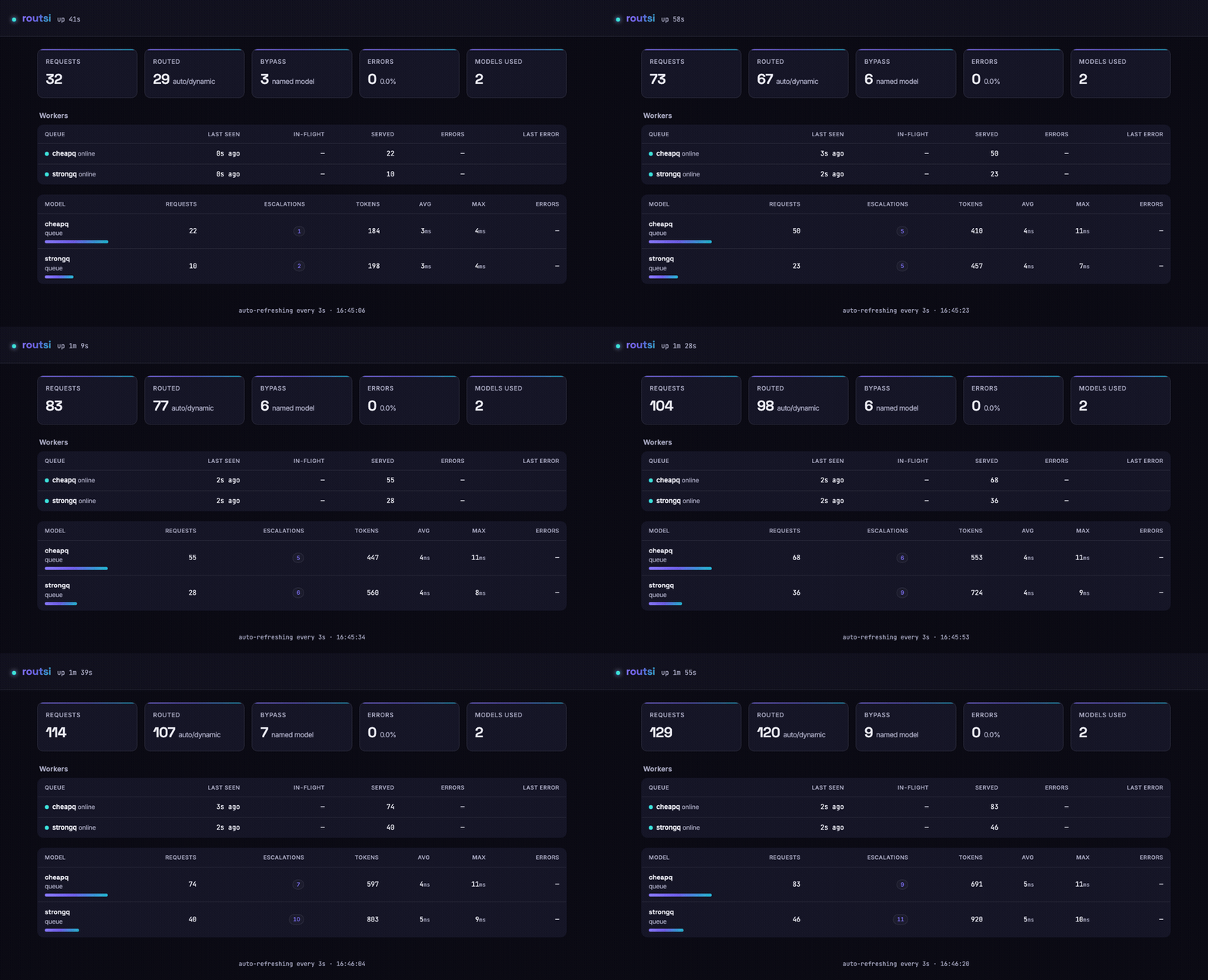
A dashboard that shows every decision.
Requests, routed-vs-bypass, per-model tokens, latency, escalations, and live worker status — self-contained at /, with /stats (JSON) and /metrics (Prometheus).
routsi routes each request to the right answerer — API models and full agents — behind one OpenAI face. Point any SDK at it.
One endpoint, many kinds of answerer
Every request is POST /v1/chat/completions. What changes is where it goes — and routsi decides.
LiteLLM, OpenRouter and Portkey are mature, powerful gateways — hundreds of providers, load-balancing, spend tracking, caching, guardrails, deep observability. If you need those, use them. routsi doesn't replace them; it does one thing they don't: route each request across fundamentally different answerers — API models and full agents — choosing per task.
| Capability | routsi | Gateways (LiteLLM / OpenRouter / Portkey) |
|---|---|---|
| Route across API models and full agents (Devin/Codex/…) | ✓ | ✗ |
| Pick the answerer per task, automatically | ✓ | ✗ |
| Agent sessions as models (resume Devin/Codex) | ✓ | ✗ |
| Bring-your-own remote worker (outbound-only) | ✓ | ✗ |
| Hundreds of providers/models out of the box | ~ | ✓ |
| Load-balance, retries, fallback across providers | ~ | ✓ |
| Spend tracking, budgets, rate limits, caching | ✗ | ✓ |
| Durable S3 usage stream + DuckDB analytics | ✓ | ✓ |
| Single self-hosted binary, no external deps | ✓ | ~ |
✓ built-in · ~ basic / partial · ✗ not a goal. Different tools for different jobs — many people run routsi in front of a gateway.
Send easy questions to cheap models and let hard ones escalate — with zero client changes. Just point the base URL at routsi.
model: "auto"Devin, Codex, Copilot, Claude Code — addressable behind one OpenAI API, each with a real, resumable session per conversation.
model: "devin/…"One Go binary you run yourself. Provider keys stay in your env, never in a SaaS path. Auth + mTLS built in.
one binary · no platformLet a teammate plug their own logged-in agent in as a pull-worker — outbound-only, NAT-friendly, credentials never leave their machine.
routsi worker runRequests, routed-vs-bypass, per-model tokens, latency, escalations, and live worker status — self-contained at /, with /stats (JSON) and /metrics (Prometheus).
Open source · MIT · one Go binary · install from npm or a release.